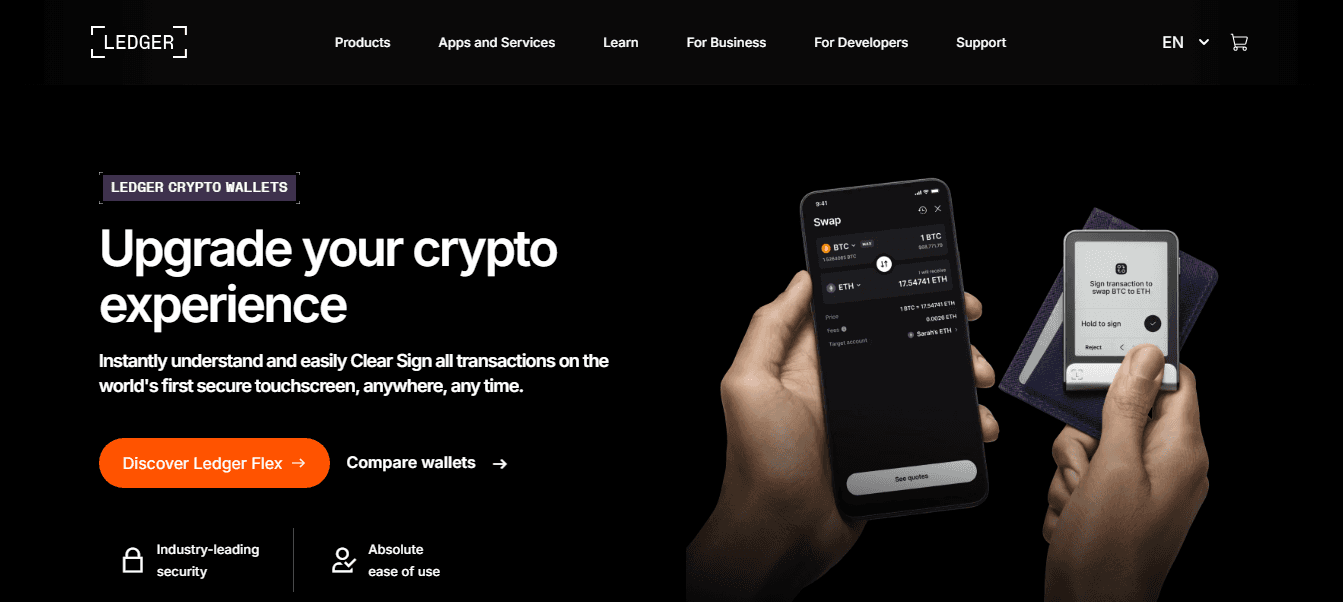
Ledger Login:
The cryptocurrency ecosystem operates on a principle unlike traditional finance: full control comes with full responsibility. There are no banks to reverse transactions, no customer support desks to recover lost credentials, and no centralized authority to protect users from mistakes. In this environment, secure access methods are essential. Ledger Login has emerged as one of the most reliable solutions for protecting digital assets while maintaining user autonomy.
This guide provides an extensive exploration of Ledger Login—how it works, why it is trusted, how it fits into modern crypto usage, and how users can adopt it safely and effectively.
What Is Ledger Login?
Ledger Login is the hardware-based authentication process used by Ledger wallets to grant access to cryptocurrency accounts and authorize blockchain transactions. Instead of relying on online passwords or cloud-based credentials, Ledger Login requires physical confirmation using a Ledger hardware device.
This system ensures that private keys—the most sensitive element in crypto ownership—remain offline and inaccessible to hackers, malware, or phishing attempts. Ledger Login transforms authentication from a digital vulnerability into a physical security advantage.
Why Authentication Is a Critical Issue in Crypto
Unlike traditional banking systems, cryptocurrencies operate without intermediaries. While this provides freedom and transparency, it also exposes users to unique risks.
Common authentication-related threats include:
Password theft through phishing
Malware stealing private keys
Fake wallet applications
Compromised browser extensions
Ledger Login directly addresses these threats by removing online credentials from the equation and requiring human presence for every critical action.
The Core Principle Behind Ledger Login
At its foundation, Ledger Login is built around one simple rule: private keys must never be exposed.
Ledger devices generate private keys internally and store them in a protected environment. Ledger Login ensures that these keys:
Never leave the device
Are never visible on a screen
Are never transmitted over the internet
Cannot be accessed by external software
This principle guarantees that ownership stays with the user at all times.
How Ledger Login Works: A Practical Overview
The Ledger Login process follows a secure and repeatable flow:
The user connects the Ledger device to a computer or smartphone
The device is unlocked using a PIN
Ledger Live or a compatible application requests access
The request details appear on the device screen
The user manually confirms or denies the request
Without physical approval, no action can be completed.
Ledger Login and Secure Hardware Architecture
Secure Element Chip
Ledger devices use a Secure Element chip, a hardened component designed to resist tampering, extraction, and side-channel attacks. This chip is similar to those used in passports and banking cards.
Isolated Execution Environment
Applications running on Ledger devices operate in isolation. This prevents one app from accessing the data or keys of another, further strengthening Ledger Login security.
Ledger Login Through Ledger Live
Ledger Live is the official software interface that allows users to interact with their Ledger device while enforcing strict security rules.
Through Ledger Live, Ledger Login enables users to:
Access multiple blockchain accounts
Send and receive cryptocurrency
Install and manage blockchain apps
View balances and transaction history
Ledger Live never stores private keys, ensuring all sensitive operations remain device-controlled.
Password-Free Security with Ledger Login
Passwords are one of the weakest points in digital security. They are often reused, guessed, or stolen. Ledger Login eliminates this vulnerability entirely.
Instead of passwords, Ledger Login relies on:
Physical device ownership
PIN-based unlocking
Manual transaction approval
This approach dramatically reduces the risk of unauthorized access.
Ledger Login Across Multiple Blockchains
Ledger Login supports a wide variety of cryptocurrencies and networks. Users can manage multiple assets from a single device without compromising security.
Supported use cases include:
Managing Bitcoin and altcoins
Holding Ethereum-based tokens
Storing NFTs
Using Layer-2 and sidechain networks
Each blockchain app operates independently within the Ledger ecosystem.
Ledger Login in Web3 and Decentralized Finance
As blockchain technology evolves, users increasingly interact with decentralized applications (dApps). Ledger Login plays a vital role in securing these interactions.
Ledger Login supports:
DeFi lending and staking platforms
Decentralized exchanges
DAO governance voting
NFT minting and transfers
Every smart contract interaction must be reviewed and approved directly on the Ledger device.
Why Ledger Login Protects Against Phishing
Phishing attacks rely on tricking users into revealing sensitive information. Ledger Login minimizes this risk by design.
Key protections include:
No online entry of recovery phrases
No password input fields
On-device verification of transaction details
Mandatory physical confirmation
Even if a user unknowingly interacts with a fake website, funds cannot be moved without device approval.
Ledger Login and Transaction Visibility
Transparency is a crucial security feature of Ledger Login. Each transaction displays detailed information directly on the device screen.
Users can verify:
Destination addresses
Transaction amounts
Network fees
Contract actions
This ensures users know exactly what they are approving.
Common User Errors and How to Prevent Them
Despite its strong security design, Ledger Login can be compromised by user mistakes.
Improper Recovery Phrase Storage
Storing recovery phrases digitally increases risk.
Solution:
Use offline storage methods such as paper or metal backups.
Ignoring Device Prompts
Approving transactions without reading details can lead to errors.
Solution:
Always review on-screen information carefully.
Using Untrusted Devices
Public or shared computers may contain malware.
Solution:
Use personal, trusted devices whenever possible.
The Role of the Recovery Phrase in Ledger Login
The recovery phrase is the ultimate backup for a Ledger wallet. Anyone with access to it can control the assets.
Key rules:
Never share it
Never photograph it
Never store it online
Never enter it into websites
Ledger Login security depends on protecting this phrase.
Ledger Login vs Software Wallet Authentication
Software wallets offer ease of use but introduce significant risks.
FeatureLedger LoginSoftware WalletPrivate Key StorageOfflineOnlineMalware RiskVery LowHighAuthentication MethodPhysicalDigitalLong-Term SecurityExcellentModerate
Ledger Login is the preferred choice for high-value holdings.
Using Ledger Login on Mobile Devices
Ledger Login is compatible with mobile platforms, allowing secure access on the go.
Mobile features include:
Bluetooth connectivity
Secure mobile signing
Asset management through Ledger Live Mobile
Security remains uncompromised even in mobile environments.
Who Benefits Most from Ledger Login?
Ledger Login is ideal for:
Long-term crypto investors
NFT collectors
DeFi participants
Businesses holding crypto
Security-focused beginners
Anyone who values ownership and protection can benefit.
Ledger Login for Long-Term Crypto Storage
Ledger Login is especially effective for cold storage strategies. Assets can remain offline and secure for extended periods.
Advantages include:
Minimal exposure to online threats
No reliance on third parties
Strong resistance to hacking attempts
This makes it a preferred solution for long-term holding.
The Future of Ledger Login
As blockchain adoption grows, secure authentication will become even more important. Ledger Login is expected to evolve with:
Web3 authentication standards
Decentralized identity integration
Improved user interfaces
Expanded blockchain support
Ledger Login is positioned to remain a cornerstone of crypto security.
Frequently Asked Questions About Ledger Login
Is Ledger Login mandatory for Ledger wallets?
Yes, it is the default authentication method.
Can Ledger Login be bypassed?
Without physical access to the device and PIN, it cannot be bypassed.
Is Ledger Login suitable for beginners?
Yes, the guided setup and confirmations make it accessible.
Final Thoughts on Ledger Login
Ledger Login represents one of the most secure and reliable authentication systems in the cryptocurrency world. By replacing passwords with hardware verification and keeping private keys offline, it dramatically reduces the risks associated with digital asset management.
In an industry where mistakes can be irreversible, Ledger Login offers a powerful combination of security, transparency, and user control. For anyone serious about protecting their crypto assets, Ledger Login is not just a feature—it is a fundamental requirement.